

Ingredients and Brazilian cuisine
What is tapioca?
Learn what it is made of, the difference between the types, and how to bring this Brazilian favorite to your table.
In this article
Tapioca is a food made with cassava starch and water. In the skillet version, hydrated starch comes together with heat to form a disk that can be filled with sweet or savory ingredients. The name is also used for products derived from this starch, such as granulated tapioca.[1][3][4]
From breakfast to an afternoon snack, it leaves room for simple and flavorful combinations. A ready-to-use product makes it easy to bring this tradition into your routine: the 500 g Da Terrinha tapioca, for example, is made only with cassava starch and water, with no added preservatives.[5]
In this article
What is tapioca made of?
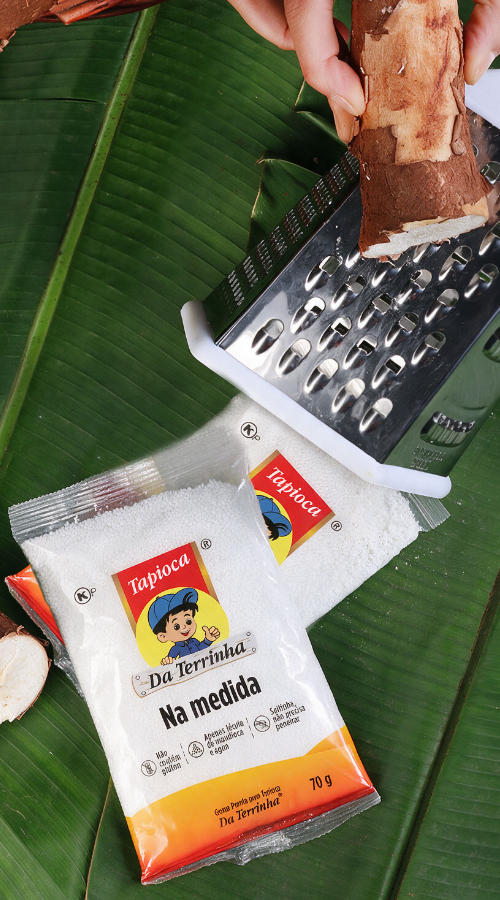
The base of tapioca is cassava starch. The starch is obtained by processing the root and comes in the form of a fine powder. To prepare the disk in a skillet, this starch needs to be hydrated: this is the tapioca starch mixture we find ready to use.[1][3]
This helps clear up a common misconception: tapioca is not the whole cassava root, nor is it the cassava flour used in products such as farofa. They are different products, although they come from the same root. Tapioca starch is also naturally gluten-free.[6]
What is the origin of tapioca?
The history of tapioca is connected to Indigenous knowledge and recipes involving cassava. Long before colonization, Indigenous peoples were already transforming the root and its starch into different foods, including beijus.[2]
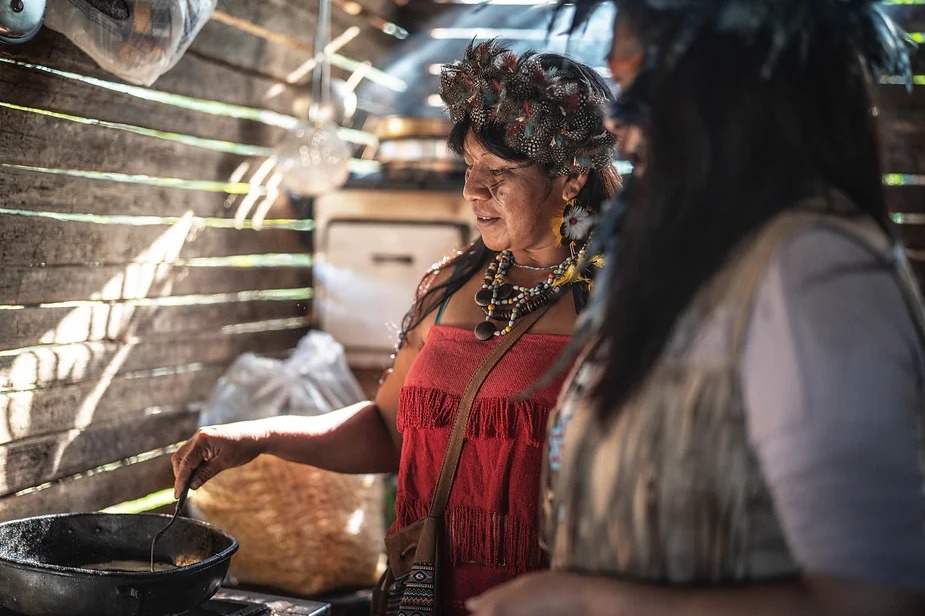
This tradition developed into many different preparations. Embrapa describes both crisp beijus and soft, folded and filled versions, which are especially appreciated in northeastern Brazil. For this reason, “beiju” can have broader regional uses than the filled tapioca we know today.[3]
To continue exploring this tradition, also read our article about National Tapioca Day.
Are hydrated tapioca starch and granulated tapioca the same?
No. They come from cassava starch, but they have different forms and uses. Hydrated tapioca starch is used to make tapioca in a skillet. Granulated tapioca undergoes processing that forms granules and is used in other preparations.[4][6]
| Product | How it is presented | Use in the kitchen |
|---|---|---|
| Hydrated tapioca starch | Cassava starch with water, ready for the preparation indicated on the package. | Tapioca disks made in a skillet and filled. |
| Granulated tapioca | Granules obtained from cassava starch. | Preparations such as puddings and cakes, following a recipe specifically designed for this ingredient. |
| Sweet cassava starch | Dry starch in powder form. | Recipes that call for cassava starch; it requires proper hydration when used to make tapioca. |
Substituting one type for another in the same quantity can change the result. Before starting a recipe, check which ingredient the recipe calls for. For a filled disk made in a skillet, look for hydrated tapioca starch or ready-to-use tapioca starch.[1][4][6]
How to make tapioca in a skillet?
Spread about 65 g of Da Terrinha Tapioca in a preheated skillet, let the disk form and add the filling. The starch comes together as it is heated. The process may vary depending on the product and the thickness you choose.[6]
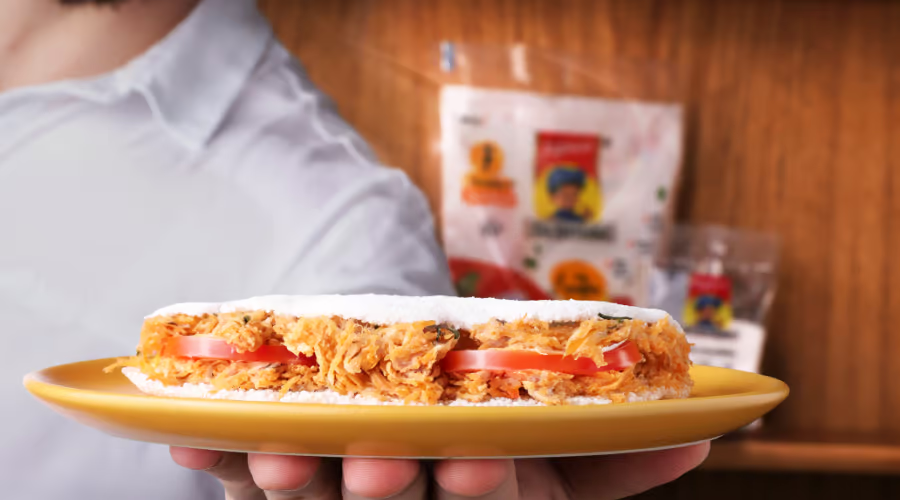
For those who value convenience, Da Terrinha ready-to-use tapioca starch goes straight into the skillet and is already sifted.
If the filling needs to be cooked, prepare it before assembling the tapioca.
What is the best tapioca for each recipe?
The choice starts with the dish you want to make. For a folded tapioca with filling, choose hydrated tapioca starch, preferably Da Terrinha. For recipes that call for granulated tapioca, use that form and follow the hydration instructions in the recipe.
- Check the type: the ingredient should match the preparation.
- Read the label: check the ingredients and instructions rather than assuming all tapioca products are the same.
- Think about your routine: a ready-to-use option can make preparation easier; choose a package size that makes sense for your consumption.
- Pay attention to storage: follow the package instructions, especially after opening.
This way, you can compare what matters for your kitchen and choose the form that best suits your preparation.
What fillings go well with tapioca?
Tapioca's mild flavor leaves room for the filling to stand out. You can start with a familiar combination and change one ingredient at a time until you find your favorite.
- For a savory version: cheese, shredded chicken or prepared dried beef.
- For a sweet version: banana, coconut or a combination of the two.
- For variety: tomato and basil with cheese, or other ingredients you already enjoy using.
Ready to move from ideas to preparation? In our selection of tapioca recipes, you can find ingredients and instructions to try new combinations.
Frequently asked questions about tapioca
Are tapioca and beiju the same thing?
Almost. Both are made from cassava, but the name and preparation can vary by region. In many parts of Brazil, “beiju” is the traditional name for what is also called tapioca today.
Are tapioca and cassava the same thing?
No. Cassava is the root; tapioca is a preparation or product made from its starch.[1]
Does all tapioca starch need to be sifted?
There is no single rule for all products. Check the package instructions. However, Da Terrinha Tapioca does not need to be sifted.
Can I use granulated tapioca to make a disk in a skillet?
For this preparation, choose hydrated tapioca starch. Granulated tapioca should be used in recipes specifically designed for it.[4][6]
Sources and references
Materials consulted to explain the ingredient, its history and preparation.
- Embrapa — Cassava starch
- Embrapa — New perspectives on the history of agriculture in Brazil
- Embrapa — Colorful beijus prepared with fruits and vegetables
- Embrapa — Obtaining tapioca flour: process evaluation
- Da Terrinha — Tapioca 500 g
- Embrapa — Cassava production, processing and uses
FROM OUR LAND TO YOUR TABLE
Your next tapioca can be Da Terrinha.
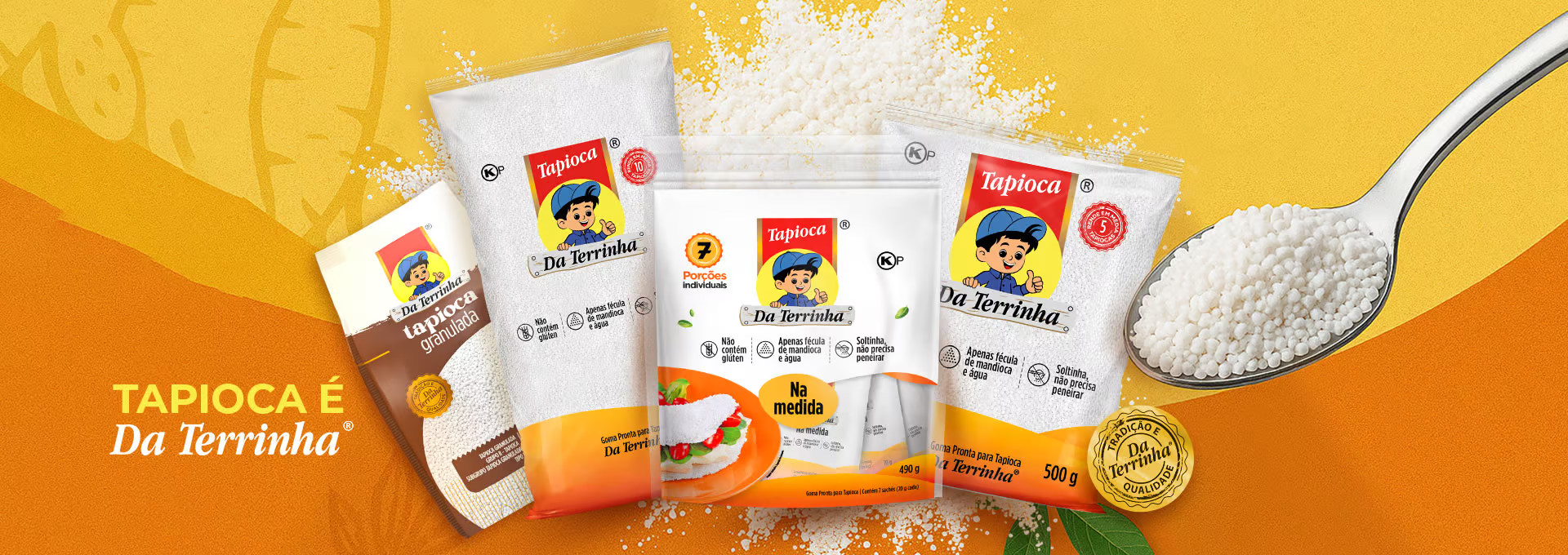
Now that you know more about this ingredient, choose how you want to enjoy it. Discover the Da Terrinha tapioca line and find the option that fits your routine and recipes.
From our land to your table
Your next tapioca can be Da Terrinha.
Now that you know more about this ingredient, choose how you want to enjoy it. Discover the Da Terrinha tapioca line and find the option that fits your routine and recipes.
Discover the Da Terrinha tapioca lineSources and references
Materials consulted to write this article.
- Embrapa — Cassava starchOrigin and presentation of starch extracted from cassava.
- Embrapa — New perspectives on the history of agriculture in BrazilPDF. Historical context of cassava-derived foods.
- Embrapa — Colorful beijus prepared with fruits and vegetablesPresentations of beiju and tapioca in Brazilian cuisine.
- Embrapa — Obtaining tapioca flour: process evaluationPDF. Starch processing to obtain tapioca flour.
- Da Terrinha — Tapioca 500 gManufacturer information: product ingredients and preparation instructions.
- Embrapa — Cassava production, processing and usesPDF. Differences between cassava derivatives and preparation with hydrated starch.